

 Try MushGPT!
 Your payment is protected
THANK YOU!
We sincerely appreciate your generous donation to Entheology Project Inc. As a 508(c)(1)(a) non-profit religious organization, your donation is tax deductible. You will receive an email confirmation for your records, which can be used for tax purposes. Your support helps us continue our mission and make a meaningful impact!
Billing Information
Your credit card will be billed under "Entheology Project Inc." with the description "Donation." If you have any questions or need further assistance, please do not hesitate to contact us. Thank you once again for your support!
Best Regards,
EP Support
info@entheo.info
Looks like there was a problem processing donation.
Summary:
- Sublingual psilocin is becoming a preferred method for its potential to provide consistent effects and reduce gastrointestinal discomfort compared to oral consumption of psilocybin mushrooms.
- The method involves placing psilocin under the tongue for direct bloodstream absorption, addressing issues of unpredictable potency.
- Users should begin with low doses to gauge personal tolerance and response.
- A safe and controlled setting is critical, along with the presence of a sober, experienced guide.
- Prior medical consultation is advised, particularly for those with mental health conditions or taking other medications.
- Awareness and adherence to legal restrictions regarding psilocybin and psilocin are necessary.
- While promising, sublingual psilocin must be approached with caution and responsibility to ensure safe and positive experiences.
Introduction
The emerging field of entheogenic facilitation has witnessed the advent of sublingual psilocin as a novel method for administering the active compound found in psilocybin mushrooms. This technique, which entails placing the substance beneath the tongue to allow for direct absorption into the bloodstream, is becoming increasingly favored for its potential to mitigate inconsistent potencies and gastrointestinal disturbances often associated with traditional consumption. Yet, alongside its benefits, sublingual psilocin brings forth critical safety and responsible usage concerns that require attention.
Irregular Potency and GI Side Effects of Mushrooms
Users of psilocybin mushrooms often encounter unpredictable variations in strength, complicating the ability to foresee the intensity of the resulting entheogenic state. Such unpredictability can culminate in unexpectedly potent experiences or a complete lack thereof, which can lead to a sense of isolation or disappointment during group sessions.
Furthermore, ingesting psilocybin mushrooms can provoke gastrointestinal discomfort, including nausea, vomiting, and abdominal pain, detracting from the user’s overall experience and focus during the entheogenic journey.
The Sublingual Psilocin Solution
Sublingual psilocin has the potential to overcome these hurdles. By circumventing the digestive system, it promises a reduction in gastrointestinal side effects. Additionally, its direct entry into the circulatory system could offer more uniform and reliable effects, presenting an intriguing alternative for those seeking a consistent entheogenic experience.
Harm Reduction Points for Sublingual Psilocin
- Dosage: Initial doses should be conservative to gauge individual reactions to sublingual psilocin. Remember that additional doses can be taken, but the effects of an excessive initial dose cannot be reversed.
- Set and Setting: The importance of a secure, tranquil environment surrounded by trusted individuals cannot be overstated, as both mental state and setting are pivotal to the entheogenic experience.
- Supervision: Whenever feasible, the presence of a sober, knowledgeable guide is advisable to assist with any demanding experiences that may arise.
- Health Considerations: Prior to engaging with sublingual psilocin, consulting a healthcare professional is crucial, particularly for those with mental health histories or those on concurrent medications.
- Legal Considerations: Awareness of the legal context surrounding psilocybin and psilocin in one’s region is essential. Despite the burgeoning recognition of their therapeutic promise, these substances remain under legal scrutiny and are prohibited in numerous jurisdictions.
Conclusion
As a contemporary alternative to psilocybin mushrooms, sublingual psilocin extends the possibility of more predictable and smoother entheogenic experiences. Nevertheless, its responsible application and the cognizance of associated risks are paramount for a secure and enriching encounter. Adhering to harm reduction principles ensures the well-being and positive outcomes for those exploring the depths of sublingual psilocin therapy.
References
- Johnson, M., Richards, W., Griffiths, R., 2008. Human hallucinogen research: guidelines for safety. J. Psychopharmacol. 22 (6), 603 – 620.
- Johnson, M.W., Griffiths, R.R., Hendricks, P.S., Henningfield, J.E., 2018. The abuse potential of medical psilocybin according to the 8 factors of the Controlled Substances Act.
- Johnson, M.W., Hendricks, P.S., Barrett, F.S., Griffiths, R.R., 2019. Classic psychedelics: an integrative review of epidemiology, therapeutics, mystical experience, and brain network function. Pharmacol. Ther. 197, 83 – 102.
- Lamb, R.J., Griffiths, R.R., 1987. Self-injection of d,1-3,4-methylenedioxymethamphetamine (MDMA) in the baboon. Psychopharmacology (Berl) 91 (3), 268 – 272.
- https://www.ncbi.nlm.nih.gov/pmc/articles/PMC4813425/
Summary
This article aims to raise awareness about the safe and responsible use of magic mushrooms, known scientifically as Psilocybe species. While research has shown potential therapeutic benefits for conditions like depression, anxiety, and PTSD, it’s crucial to be aware of the risks involved. Key points include the danger of misidentifying mushroom species, the importance of the psychological and environmental context (“set and setting”), and the need for caution among those with pre-existing mental health conditions. Additionally, the article discusses the legal ramifications of mushroom use and the risks of combining them with other substances.
“Magic mushrooms,” scientifically known as Psilocybe species, have been a part of traditional healing and spiritual practices for centuries. Recent research has pointed to their potential for treating a range of medical conditions, including depression, anxiety, PTSD, addiction, cluster headaches, and anorexia nervosa 1. However, while these mushrooms are not toxic in the traditional sense, misuse can lead to several types of harm. This blog aims to create awareness about the safety precautions one should take while considering the use of magic mushrooms.
The Risks of Misidentification
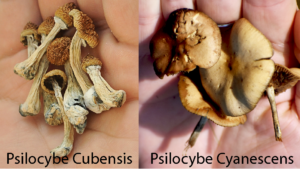
One of the primary risks associated with magic mushrooms is the danger of consuming the wrong species. Certain mushrooms are highly toxic and can lead to severe illness or even death if ingested 2. Always consult experts and ensure proper identification before consuming any wild mushrooms.
The Importance of “Set and Setting”
The “set and setting” — that is, your mindset and environment — play a vital role in shaping your experience with magic mushrooms. Being in a supportive, safe, and familiar environment can greatly enhance the experience. On the other hand, using mushrooms in a chaotic or stressful setting can lead to paranoia, anxiety, and risky behavior3.
Pre-existing Mental Health Conditions
Individuals with pre-existing mental health conditions, such as schizophrenia or bipolar disorder, should exercise extreme caution. Consuming psilocybin mushrooms can exacerbate symptoms and worsen the condition 4.
Psychological Preparedness
Magic mushrooms induce significant alterations in perception, mood, and thought. If you are not mentally prepared for these intense experiences, you could find them distressing or even traumatic 5.
Risk of Accidents
The altered state of consciousness created by psilocybin mushrooms significantly increases the risk of accidents and injuries. This risk is heightened if you attempt to drive or operate machinery while under the influence 6.
Legal Ramifications
It’s essential to note that in many places, psilocybin mushrooms are classified as a controlled substance. Possession, cultivation, or distribution could lead to severe legal consequences 7.
Combining with Other Substances
Mixing psilocybin mushrooms with other substances like alcohol or prescription medications can lead to unpredictable and potentially harmful effects 8.
Conclusion
Magic mushrooms have potential therapeutic benefits but should be used responsibly and cautiously. Always do your research, consult healthcare providers when appropriate, and be aware of your mental and physical state before embarking on this journey. Special caution should be exercised by individuals with pre-existing mental health conditions, those in stressful environments, or those considering combining mushrooms with other substances.
Footnotes
- Carhart-Harris, R. L., & Goodwin, G. M. (2017). The therapeutic potential of psychedelic drugs: past, present, and future. Neuropsychopharmacology, 42(11), 2105-2113.
- Benjamin, D. R. (1995). Mushrooms: poisons and panaceas—a handbook for naturalists, mycologists, and physicians. WH Freeman and Company.
- Hartogsohn, I. (2016). Set and setting, psychedelics and the placebo response: An extra-pharmacological perspective on psychopharmacology. Journal of Psychopharmacology, 30(12), 1259-1267.
- Carbonaro, T. M., & Gatch, M. B. (2016). Neuropharmacology of N, N-dimethyltryptamine. Brain research bulletin, 126, 74-88.
- Carhart-Harris, R. L., & Nutt, D. J. (2010). User perceptions of the benefits and harms of hallucinogenic drug use: a web-based questionnaire study. Journal of Substance Use, 15(4), 283-300.
- Hallock, R. M., Dean, A., Knecht, Z. A., Spencer, J., & Taverna, E. C. (2013). A survey of hallucinogenic mushroom use, factors related to usage, and perceptions of use among college students. Drug and alcohol dependence, 130(1-3), 245-248.
- Nutt, D., King, L. A., & Nichols, D. E. (2013). Effects of Schedule I drug laws on neuroscience research and treatment innovation. Nature Reviews Neuroscience, 14(8), 577-585.
- Johnson, M. W., Richards, W. A., & Griffiths, R. R. (2008). Human hallucinogen research: guidelines for safety. Journal of psychopharmacology, 22(6), 603-620.
In this illuminating exploration into the shifting sands of mental health research, the focus moves away from serotonin to the emerging importance of Gamma-aminobutyric acid (GABA) and muscimol 1. The article delves into how these molecules regulate mood, sleep, and anxiety, thereby challenging existing paradigms 2-3. From discussing natural ways to enhance GABA’s effects to investigating the untapped potential of muscimol, this comprehensive guide stands at the cusp of a transformative shift in mental health understanding 4-5. The article advocates for a cautious, evidence-based approach, acknowledging that these are early yet promising days in neuroscience.
The Role of GABA and Its Importance
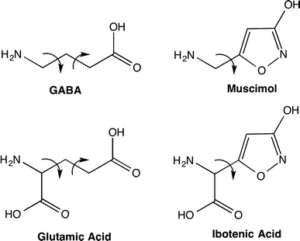
There’s a growing consensus that GABA may be as important as serotonin in understanding conditions like depression. GABA serves as the brain’s calming agent, and imbalances can lead to a range of neurological issues:
- Anxiety Disorders: Associated with GABA imbalances 8.
- Sleep Disturbances: GABA is key in sleep regulation 9.
- Mood Disorders: Fluctuations in GABA levels can affect mood 10.
- Cognitive Impairment: GABA influences cognitive functions like memory 11.
- Pain Perception: GABA modulates pain sensitivity 12.
GABA’s role is complex, and it’s just one piece of a larger puzzle.
Natural Ways to Enhance GABA
GABA is found in foods like tomatoes and white tea and can be boosted through various strategies:
- Meditation and Mindfulness: Increases GABA levels 4.
- Exercise: Activities like yoga may enhance GABA 3.
- Supplements: Substances like L-theanine can support GABA 5.
- Herbal Remedies: Traditional herbs may boost GABA 15.
- Stress Management: Methods to handle stress can aid GABA 6.
- Sleep Hygiene: Proper sleep supports GABA 7.
Muscimol: The Newcomer on the Block

Muscimol, a derivative of Amanita pantherina mushrooms, is garnering attention for:
- Alcohol Alternatives: Due to its GABA agonist properties 8.
- Anxiety Management: Shows promise for anxiety relief 9.
- Potential Antidepressant: Interacts with the GABA system 10.
- Neuroprotection: Promotes brain health 11.
Benefits of Muscimol Over Alcohol
- Liver Health: One of the most significant advantages is the reduced strain on the liver, as muscimol doesn’t have the toxic effects commonly associated with alcohol.
- Cognitive Function: Unlike alcohol, which can impair cognitive abilities and decision-making, muscimol has shown promise in potentially enhancing certain cognitive functions.
- Caloric Intake: Alcohol is notoriously high in empty calories, contributing to weight gain. Muscimol has no such effect, making it a better choice for those conscious of their weight.
- Reduced Risk of Addiction: While further research is needed, early indications suggest that muscimol may have a lower potential for abuse and addiction compared to alcohol.
- Social Ease: An intriguing benefit of muscimol is its potential to facilitate easier social interactions, without the negative repercussions often associated with alcohol, such as aggression or impaired judgment.
Precautions and Future Research
It’s worth noting that while muscimol presents an exciting alternative to alcohol, it is a potent compound that requires responsible use and further study. The long-term effects are not yet fully understood, and it’s advisable to consult healthcare professionals before making any changes to your lifestyle or treatment plan.
By exploring healthier alternatives like muscimol, we may be taking a significant step toward a future where socializing and relaxation can be achieved without compromising our long-term health.
References and Sources
- Frontiers in Neuroscience 2020; 14: 923
- Cleveland Clinic, GABA
- Neuropharmacology January 2012; 62(1): 42-53
- Psychotherapy and Psychosomatics September 14, 2017
- Big Think September 25, 2017
- Molecular Psychiatry July 20, 2022 DOI: 10.1038/s41380-022-01661-0
- Haidut.me August 1, 2023
- WSJ July 28, 2023
- ZeroHedge July 31, 2023
- http://haidut.me/?p=2302
- krediet-et-al-ijnp-2020.pdf, p. 13, pos. 298
- Molecular Psychiatry July 20, 2022 DOI: 10.1038/s41380-022-01661-0
- WSJ July 28, 2023
- ZeroHedge July 31, 2023
- The BMJ 20155; 350: h2435